

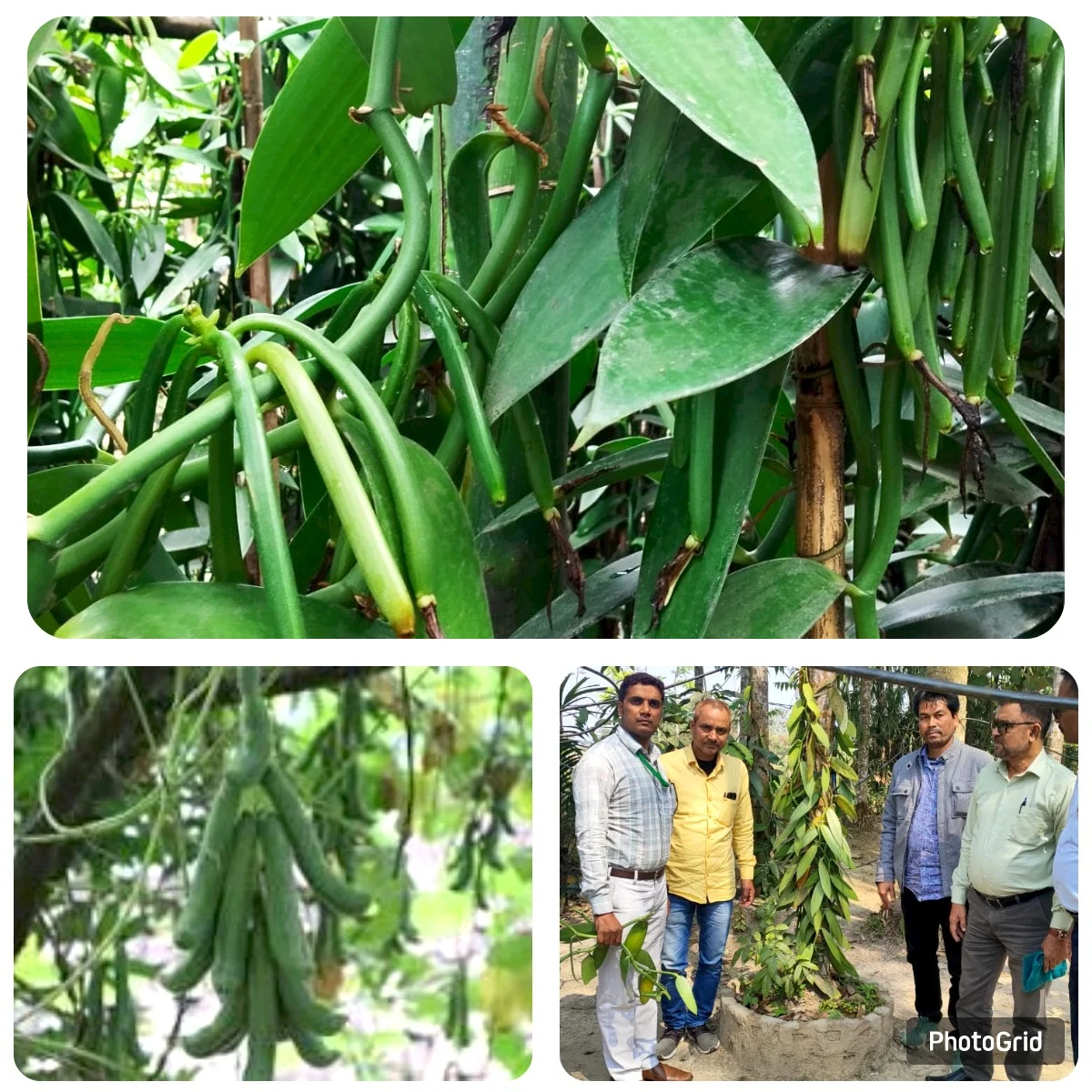
Vanilla
cultivation is the specialized, highly labor-intensive agricultural process of
growing the tropical climbing orchid Vanilla planifolia to harvest green seed
pods that are subsequently cured into valuable vanilla beans.
Key Cultivation Parameters
|
Parameter |
Optimal Requirement |
|
Temperature |
21°C to 32°C |
|
Annual
Rainfall |
1,500 mm to
3,000 mm |
|
Soil Type
& pH |
Porous,
well-drained loam with high humus (pH 6–7) |
|
Shade Level |
50% to 75%
filtered shade |
|
Average Yield |
300 to 600
kg/ha of cured beans |
Climate and Soil Requirements
·
Temperature and Humidity: The plants need a warm and humid tropical climate with
well-distributed rainfall for ten months and a short, two-month dry period to
trigger flowering.
·
Shade Management: Vanilla vines
are sensitive to direct, harsh sunlight and require shade trees to create a
natural forest undergrowth environment.
·
Soil Conditions: The soil must
be loose, friable, and rich in organic matter because vanilla roots stay close
to the surface layer and depend on heavy leaf mulch.
Propagation and
Planting
·
Support Trees: Farmers plant
live tutor trees or stakes at least six months before introducing the vanilla
cuttings so the support system is fully established.
·
Stem Cuttings: Propagation
relies on healthy stem cuttings ranging from 60 cm to 120 cm in length.
·
Planting Method: The lower
leaves of the cutting are removed, and the defoliated portion is laid shallowly
in loose soil or mulch, while the growing tip is tied gently to the support
tree.
Pollination and
Care
·
Hand Pollination: Because
natural insect pollinators are absent outside Mexico, workers must pollinate
each waxy flower manually using a small wooden stick or bamboo splinter within
hours of the flower opening.
·
Organic Manuring: Plants prefer
organic fertilizers such as vermicompost, cow dung, or poultry manure applied
around the base several times a year.
·
Mulching: Thick layers
of leaf mulch are maintained around the base of the vines to retain moisture
and supply necessary organic nutrients without disturbing the shallow root
system.
Project Details
Support this Project
Your small contribution can make a significant difference in the success of this initiative.
Donate Now