

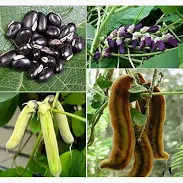
Velvet bean cultivation (scientifically known as Mucuna pruriens, and locally called Kaunch, Kewanch, or Kursa) is a highly profitable medicinal and agricultural practice across Bihar, Jharkhand, and Uttar Pradesh (UP). Traditionally grown as a minor or wild crop, it has gained massive popularity in the Indo-Gangetic plains and Chota Nagpur plateau due to its high demand in the pharmaceutical industry for L-DOPA (used to treat Parkinson's disease) and its exceptional properties as a soil-enriching cover crop.
Regional Breakdown & Specific Practices
- Jharkhand: Locally referred to as Kursa, velvet bean is actively promoted in tribal districts (such as Sundar Pahari and Littipara) as part of guided fallow and forest garden initiatives. Because of Jharkhand's undulating, water-scarce terrain, farmers plant it as a "live mulch" during the July–August monsoon to prevent soil erosion, retain moisture, and naturally suppress invasive weeds.
- Bihar: Cultivated primarily in the fertile plains as an intercrop or seasonal cash crop. It is highly integrated into organic farming clusters to rejuvenate the soil after intense cereal crop cycles (like rice and wheat).
- Uttar Pradesh: Widely grown in both Western UP and the Bundelkhand region. In Bundelkhand, it acts as a drought-resilient rescue crop, whereas in more fertile zones, it is grown on commercial scales utilizing sturdy bamboo trellises to maximize seed yields.
🌱 Cultivation Requirements & Package of Practices
A breakdown of the ideal environmental and management conditions for cultivating velvet beans in these states includes:
| ParameterRequirements & Details | |
| Climate & Temperature | Thrives in hot, humid tropical to sub-tropical conditions (15°C to 38°C). Ideal for the monsoon (Kharif) season in North India. |
| Soil Type | Prefers well-drained sandy loam to clay loam soils with a pH range of 5.5 to 7.5. It tolerates poor, low-fertility soils exceptionally well. |
| Sowing Time | Sown at the onset of the monsoon in June or July. |
| Spacing & Support | Sown 1–2 inches deep at a spacing of 1×1 meter or 1×1.5 meters. Being a vigorous climber (vines up to 15m), it requires a bamboo pole or trellis support system for maximum yield. |
| Cropping Duration | Takes roughly 180 to 200 days to reach full maturity, with flowering starting around 120 days. |
| Yield Expectation | Average seed yield spans 2.5 to 3.0 metric tonnes per hectare under managed conditions. |
💡 Multi-Purpose Benefits for Regional Farmers
- High Commercial Value: The seeds are bought by pharmaceutical companies for extracting chemical compounds. Improved varieties, such as Zhandu Kanchha, yield high L-DOPA concentrations (around 4.5%), guaranteeing stable market prices.
- Nitrogen Fixation: As a legume, its root nodules fix massive amounts of nitrogen, dramatically reducing a farmer's reliance on chemical fertilizers for subsequent crops.
- Weed Control & Live Mulch: The dense, fast-growing canopy completely covers the ground, effectively suffocating weeds and cutting down labor costs for weeding.
- [1, 2, 3]
- Fodder & Green Manure: The biomass can be ploughed back into the soil as green manure or used as a protein-rich fodder to boost milk production in cattle and goats.
Project Details
Support this Project
Your small contribution can make a significant difference in the success of this initiative.
Donate Now